
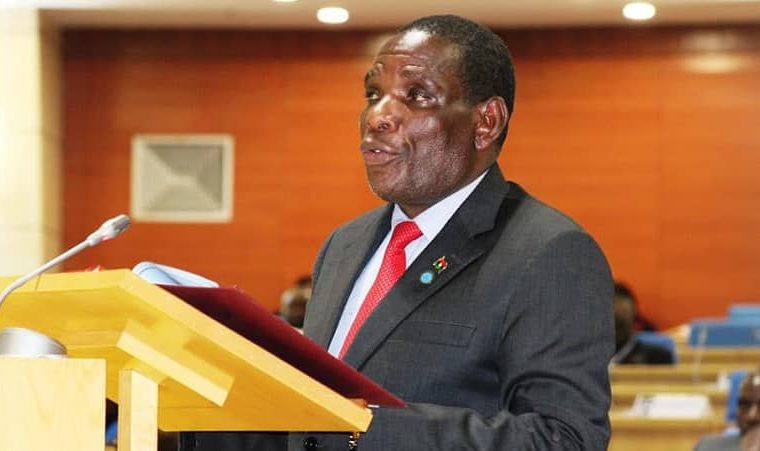

Government has effected the new tax measures announced by Minister of Finance, Economic Planning and Decentralization during the presentation of the 2025/26 Mid-Year Budget Review in Parliament last November.
According to a statement signed by the Malawi Revenue Authority Commissioner General Felix Tambulasi, the series of tax reforms took effect from 30 December 2025.
The measures, which touch on income tax, customs and excise, and value added tax, are intended to broaden the tax base and strengthen domestic revenue mobilization.
According to new tax measure, Pay As You Earn (PAYE), has now seen the zero-rate threshold move from K150 000 to K170 000 per month. The 25 percent tax bracket has been removed, with new rates set at 30 percent for monthly incomes between K170,000 and K1.57 million, 35 percent for incomes up to K10 million, and 40 percent for those earning above K10 million.
A levy of 0.05 percent has also been introduced on all bank transfers, payable by the sender, while mobile money transfers in excess of K100 000 will attract the same charge.
Companies will now face tighter obligations under the revised supernormal profit tax, with the threshold reduced from K10 billion to K5 billion. Firms earning below K5 billion will be taxed at 30 percent, while those above will pay 40 percent.
In addition, a Minimum Alternate Tax of 0.5 percent of turnover has been introduced for companies with turnover above K5 billion and operating for more than three years. The government has also removed exemptions on capital gains tax for shares, meaning all disposals will now be taxed.
The gambling and lottery sector has not been spared, as tax-free thresholds of K100 000 and K500 000 have been scrapped. All winnings will now be subject to withholding tax, with the rate increased from 10 percent to 15 percent.
On the trade front, the government has reinstated a 20 percent surcharge on imported cement under HS Code 2523.29.00, a move expected to protect local producers. Meanwhile, consumers will see the Value Added Tax rate rise from 16.5 percent to 17.5 percent.
The new measures are expected to have significant implications for households and businesses alike, with higher-income earners and large corporations bearing the brunt of the reforms.
In its Annual Economic Report released on Monday, Malawi Confederation of Chambers of Commerce and Industry cautioned that the revenue measures in the 2025/26 Budget, while necessary for addressing Malawi’s fiscal pressures, have important implications for the business environment and therefore call for a carefully balanced policy approach.
Reads the report in part: “Increased transaction levies, higher VAT, the introduction of a Minimum Alternate Tax, and higher withholding and capital gains taxes will raise the cost of doing business, compress cash flows, and potentially reduce firms’ capacity to reinvest and expand.
“For many formal businesses, already operating under foreign exchange shortages, high interest rates, and weak demand, these measures may further strain profitability and, in some cases, discourage formalisation and investment. In the short term, the cumulative tax burden risks slowing private sector activity, with possible knock-on effects on employment and economic growth.”
Government, however, maintains that the changes are necessary to stabilize public finances and create fiscal space for development priorities.