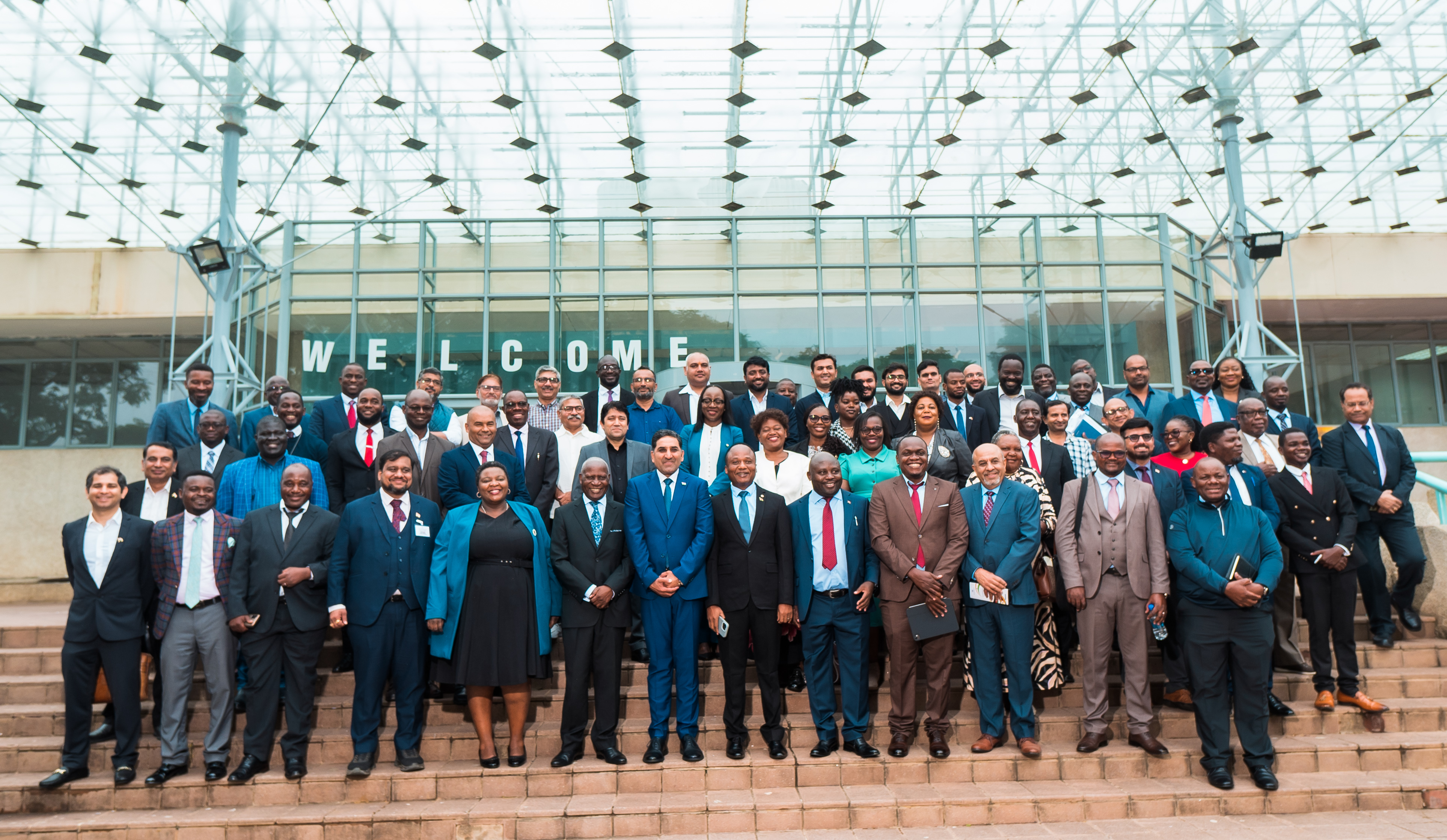


The Malawi Confederation of Chambers of Commerce and Industry (MCCCI) has released its 2025 Annual Economic and Business Review Report, outlining seven critical areas that must be addressed to unlock private sector growth and drive long-term economic transformation.
The report stresses that Malawi’s economy, highly vulnerable to climate shocks and fiscal pressures, requires urgent reforms and targeted investments to strengthen resilience, competitiveness, and sustainability.

One of the central recommendations is the adoption of climate-resilient production systems. With agriculture forming the backbone of the economy, MCCCI calls for greater investment in irrigation, climate-smart technologies, resilient seed varieties, and improved water management. The report also emphasizes the need for disaster-resilient infrastructure, better logistics, and modern storage facilities to reduce supply chain disruptions and post-harvest losses.
On fiscal policy, the report warns that rising public debt and widening deficits pose risks to stability. It urges government to pursue fiscal discipline and public finance reform, including stronger tax administration, reduced leakages, and prudent expenditure controls. Transparent debt management and adherence to credible fiscal rules are highlighted as essential to restoring investor confidence.
The report further underscores the importance of enhancing the investment climate. MCCCI advocates for predictable policies, streamlined regulations, and improved access to foreign exchange. It notes that small and medium-sized enterprises (SMEs) must be prioritized as engines of job creation and diversification.
Energy infrastructure is identified as another binding constraint. The report calls for accelerated investment in generation, transmission, and distribution, alongside diversification into renewable sources such as solar and hydro. Fast-tracking industrial parks with dedicated power supply and shared infrastructure is seen as vital to boosting productivity.
To strengthen external stability, MCCCI recommends export diversification and market expansion. Moving beyond reliance on primary commodities, the report proposes scaling up agro-processing, light manufacturing, and services, while leveraging regional trade frameworks such as AfCFTA, SADC, and COMESA.
Addressing persistent foreign exchange shortages, the report highlights the need for policies that boost inflows through export-oriented investment, formal remittance channels, and improved retention mechanisms. Targeted import substitution, particularly in food and energy, is also suggested to ease pressure on the balance of payments.
Finally, the report emphasizes human capital development as the foundation for sustained growth. Investments in education, technical and vocational training, and digital skills are deemed critical to industrialization. Health and nutrition interventions are also highlighted as key to improving labor productivity.
According to MCCCI, these reforms and investments, if pursued with urgency and consistency, could reposition Malawi’s private sector as a driver of inclusive growth and resilience in the face of global and domestic challenges.